Return To Complex Characters Proposal, Netizen Reactions

  • 142 comments

i-want-to-write-simplified-complex-characters

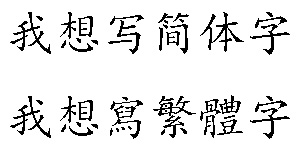
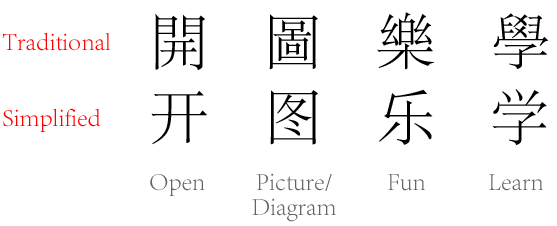
Right now, the NPC (National People’s Congress) and CPPCC (Chinese People’s Political Consultative Conference) are happening in China. One of the proposals that were made by committee members in these organizations was to restore, resume, resurrect, or return to traditional/complex Chinese characters.
traditional-vs-simplified-open-picture-fun-learn

Here are some of the reactions by Chinese netizens:

From Tianya:

Must Not Restart Complex Characters, Otherwise Everyone Will Suffer

This person is against the proposal and makes 5 points:

  1. The cost of changing textbooks. The students who go to school must bear these costs because the country will not pay for them. If we say the textbooks are not expensive, only a few dozen kuai, what about the impoverished areas who already cannot afford the these few dozen kuai textbooks? What about all the university students who graduate this year who do not know how to read or write complex characters, what will they do? Go back to school and relearn everything? Who will pay for it?
  2. Will bad bad for doing business also, because signs and advertisements will all need to be changed. How much money must be spent to
  3. The cost for the government for things like government seals, etc., all need to be changed. Each only costs a few dozen kuai but has everyone thought of how many government departments are in all of China? These costs are all paid by the ordinary common people!
  4. This language problem will affect every aspect of the people’s lives and cost an enormous amount of resources for the people. Who will pay for everything in the end? The ordinary common people.
  5. The ressurection of complex characters looks like a simple thing, but it will affect over a bilion people. If the CPPCC has so much desire to do something, they should spend their energy on “reforming education, medical care, housing, employment, etc.”

Comments:

冷月流星:

His mother’s dog fart! [Bullshit!]
Even if the legislature uses complex/traditional characters, how many people will truly go use it?
Will computers need to invent a new complex character input method?
Do not mention this again, those who have this kind of thought are all SB.

顺民一个:

I am speechless, changing simplified to complex, I can foresee this being something more difficult than medical reform. Even if the entire country’s teachers get training in batches is already almost impossible to accomplish. It is basically an unrealistic/impractical thing.

金刚玉米:

Chinese culture needs complex characters as a carrier to transmit it on [to future generations].

jhwind2008:

It has already been 60 years since the founding of the country [New China].
Does China have more culture now? — No!
Does resurrecting complex characters mean getting culture? — No!
Is China really 5000 years of civilization/culture? –No!  Cockroach civilization/culture! Only cockroaches can endure and survive so comfortably in this kind of situation!!!!
What is wrong with having things a little easier/simpler??!!!

飞葡萄:

There are a lot of things we can no longer go back to!
It is impossible for us to use complex characters again.
Or are you telling us to start all over and learn complex characters?

苦海潜水难免冒泡:

This group eats shit and shits food. How many important things in society have not been handled, such as the economic crisis, rising unemployment rate, university student employment, migrant worker pay, unequal distribution, corruption,…these they do not want to fix, and they spend all day thinking one moment of changing to complex characters, another moment of changing to simplified characters, another moment changing to Japanese characters, fuck, if you guys think your eggs/balls hurt, go home by yourself and take care of it, making some silly proposals, truly so stupid!

顺民一个:

I really get the feeling that those who support complex characters are all non-mainland people, because they all support these things that cost money but do nothing. Are you all just trying to get the mainland ordinary common people to spend more money and  suffer more, so then China will collapse like the previous Soviet Union, or even become a new colony before you will be happy?

namp:

Poor elementary school students.
I remember back in my time the elementary school student punishment regulations was copying/writing something 100 times and I spent an entire night copying. I bet if it would have taken twice as long if it were complex characters.

崔特:

Resurrecting complex characters is like asking women to restart binding their feet.

Amacsu:

This issue has the same reasons as whether or not to learn English…
It is enough to have some genius be cultivated/trained to a professional level. Let them research, inherit, and carry on. Is it worthwhile to have all the people do it?
What I am interested in, I am willing to learn, so whether you resurrect it or not has nothing to do with me.
What I am not interested in, I will not want to learn, so if you force me to learn, will I learn it well?
I find these stupid cunt representatives the most annoying, are they bored nervous or are they afraid of losing face if they do not propose something? Looking at things from one side, having learned decades of Mao Thought, their experience not even the level of a middle school graduate…whose tragedy is this…[their's or our country's?]?

妍子Chceni:

Talking about cross-straits relations, all bullshit. Why should 1.3 billion people change for Hong Kong and Taiwan, huh?~

何突突:

I support complex characters, because I believe every ethnicity’s history cannot be cut off so wantonly,  so roughly, without reason, and artificially. Our ethnicity cannot, in the span of a few years, become unable to recognize our own forefather’s language, unable to understand the culture of the land we exist on. Strongly support restarting/resurrecting complex characters! [This comment was written in complex characters]
evolution-of-chinese-characters

From Tianya:

Abolish Simplified Characters And Resume Complex Characters, Do Our Billions Of Countrymen Agree?!

This post-topic was also against the complex characters proposal. It was very long so here are some of the more interesting things:

  • Argues that Mao Zedong and the Communist Party originally simplified characters to improve illiteracy rate and allow the Chinese people to spend more time learning and developing other fields to advance China.
  • Simplified characters also developed to to “lighten the burden” for foreigners so they can learn Chinese faster, better, and promote international cultural exchange.
  • The only people who support the abolition of simplified Chinese characters are 1. people who like to impose their will on other people and show off. 2. “Certain groups at home or abroad” who want to split/divide China and destroy the glory and accomplishments of Communist China’s first 30 years.
  • Gives examples of Anglo-American simplification: colour > color, favour > favor, odour > odor, hippopotamus > hippo, rhinoceros > rhino,Christmas > Xmas, television > TV, federal government > fed gov, Republican Party > GOP, George Walker Bush > G. W. Bush, How are you?/How are you doing? > How ya? How ya doin?,I agree/I accept/No problem/etc. > OK.
  • Says Anglo-American countries are hypocrites who also simplify their language so “communications will be easier, learning will be easier, the society can develop faster, and the people can become more creative” but do not want the Chinese to enjoy the same.

Comments:

fushiqing:

Every year there are some stupid cunt committee members who suggest a few pointless proposals, simply wasting public resources and playing to the gallery. How are these stupid cunts qualified to represent us?

再不行我要生气了:

Too lazy to read the entire essay, but just reading the title, I am against it. When I write simplified characters, I still dislike how many strokes there are, I am lazy.

夏天的梅子:

There is nothing bad about restarting complex characters!
No one said it has to be like Putonghua [Mandarin] and spread so that everyone knows! Only to have the people know it a little, and anyway this is also Chinese culture!

jpttu:

Some things may be bothersome but worth it. For example, any “tea culture”. Is it not just making a cup of tea, why make it so complicated?? I support having us reacquaint ourselves with our complex characters, but do not advocate replacing simplified characters!

yuh1985:

What I do not understand is, why should 1.3 billion people always have to listen to some stupid cunt proposals to please 20-30 million people?…Is that not a little lacking in self-respect/self-identity?

xlgigi:

Looks like I will have to relearn language, so sad~~~

虫虫族:

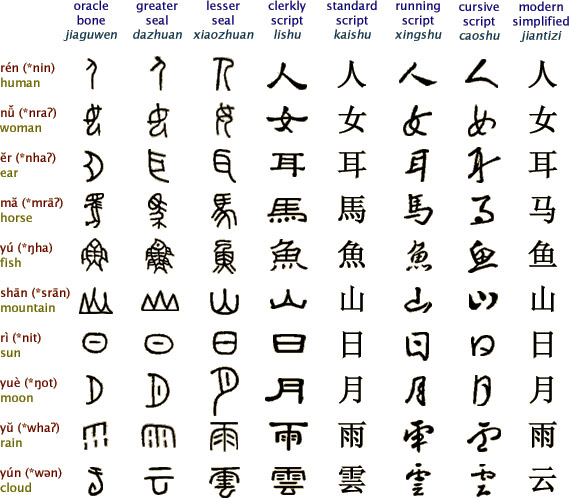
The more this old committee member lives, the more backwards he goes…he should propose that we start to use bone inscriptions…bone inscriptions are the real traditional written language of the Chinese ethnicity…but does he know them? …If China were all like this old pedant…that would truly be China’s tragedy…

中华汉魂:

Support, if we do not say something, the government might really go back to complex characters. Those above who support complex characters, I simply do not believe you guys can really write all the complex characters.

温江风子:

I have not yet decided, do not represent me, please.

simplified-vs-complex-car

Click to see a funny blog post: "The Chinese Character I Hate the Most"

Poll

Should China return to using complex characters or continue with simplified characters?

View Results

Loading ... Loading ...

Why do you think China should return to complex characters or stay with simplified characters?

Share:
  • Digg
  • StumbleUpon
  • Slashdot
  • Haohao
  • del.icio.us
  • Reddit
  • Technorati
  • Facebook
  • MySpace
  • LinkedIn
  • Google Bookmarks
  • Netvibes
  • Yahoo! Buzz
  • Live
  • Twitter
  • email
  • Print
  • RSS

Related Posts:

142 Responses to “Return To Complex Characters Proposal, Netizen Reactions”

  1. Vote -1 Vote +1 +6
    Phil
    says:

    First, you can type complex characters with pingying, you wouldn’t have to make any changes other than download it from your windows/mac osx install cds.

    Second, to the post-topic, those are abbreviations/slang. The spelling of some of those words changed because the pronunciation of the words are different, you could study that in linguistics but it’s quite tedious.

    Third, I’m a supporter of complex character solely on the basis of cultural history and aesthetic value. Personally, in about 2-4 years (or sooner) when the majority of China owns computers and Chinese classrooms utilize technology more, there will probably be no need to actually know how to write the characters by hand. This would be a tragedy in-and-of-itself.

    • Vote -1 Vote +1 -12
      Alex
      says:

      The fact that you wrote “pinying” instead of pinyin means that you, personally, can’t type shit with pinyin. Idiot.

    • Vote -1 Vote +1 +6
      Annoymous
      says:

      My Uni Chinese teacher made a very good point that made me changed from complex loving to simplified.

      The point is:
      Chinese characters had been evolving since ancient times, and simplified is just part of the evolution. If people love traditional so much, then they should go back to the jia gu wen and stay in the past forever, as jia gu wen is the most “traditional” of all.

      People back in the past also need to learn new writing formats in order to get to today’s traditional, and thus traditional is not the “final” form, but part of the evolution.

      Honestly, to me, I think anyone who uses the arguement of perserving the history is BS, they just can’t accept/change. Our society is changing today, we are evolving as well. The things we do are evolving (from using pen and paper to computers when taking notes, letters to emails). People have to move on. If people love their history so much, they should not go online, they should stay back to the 1800’s with pen, paper, bikes, candles, and etc.

      I am taking a logical point of view, not the cause and effect (what happens if traditional is back – money wasted in text books/people won’t know their own history/culture). People should not use cause and effect, as anything can happen, it’s unpredictable. And so far, from my logic, I am for simplified. I mean if logically speaking, if you want to perserve history/culture so much, one should go back using jia gu wen instead, that really perserves culture.

      • Vote -1 Vote +1 +3
        J
        says:

        It’s not really evolution if you’re going backwards. Just look at the chart/picture. The words slowly evolved into something more complex, not the other way around. (*Note xinshu and caoshu are just cursive versions, so it isn’t really part of the development of the Chinese characters.) Your argument of using jia gu wen is (no offense)BS. For starters, how many people do you honestly think can even read jia gu wen, let alone write it? Second of all, back then, half the freakin characters weren’t even formed. You’re taking it to the extremities, which is completely unnecessary.
        You really should care more about culture and history. If it weren’t for it, you wouldn’t even be right now. Ya sure, society evolve, and change, and yes people have to keep up with that. But just because society and people are changing doesn’t mean you can’t preserve culture. without it, where the hell would you be right now? honestly. By saying that preserving history is BS just shows how little you actually know about it. We look at history to learn from the past, whether it is why they failed or how they succeeded. Preserving history should be something you ought to be proud of.
        If everyone took the logical way, society wouldn’t be here right now. Say goodbye to all the arts, say goodbye to everything around you that has a design, say goodbye to anything that remotely shows culture. (which is basically everything.) You ARE here because of culture. Otherwise, we’d still be cavemen sitting around half naked with a club screaming at each other ‘bambam’.
        And really,(assuming you are Chinese), you should be proud of this culture and doing all you can to preserve it. All around the world more and more people are beginning to acknowledge our culture and embracing it, falling in love with it. And guess what? Most scholars who have been studying Chinese for years write traditional. Why? Because it can really show what they mean, what they feel. It is the form that has been passed down for generations, for centuries. Switching to simplified isn’t ‘evolving’, it is a slap to our ancestor’s faces. In the most classic argument- “What is love without a heart?”
        As for the rest of the people whom are just ‘too lazy’, really, there are so much more things in life that requires more effort, maybe you should stop them too. It doesn’t take that much more effort. Especially if you start young.
        Traditional makes it easier to learn Chinese. It actually has meaning to it. Every stroke in each character has a purpose and a meaning.

        • Vote -1 Vote +1 +2
          Anonymous
          says:

          Don’t feel like typing a paragraph, so I will make few points:
          - if Culture = Language
          and Language = Grammar + Spelling (characters in this case)

          Then culture = Grammar + Characters
          But the fact is that our grammar (Chinese) had changed a lot. Looking back at scripts from 500 years ago, it’s not possible for normal Chinese to understand them 100%. The characters are the same, yet the grammar is different. My dad, who used to be a newspaper editor, does not fully understand those scripts. He said he just memorize them because they are impossible to understand (he’s not stupid, he openned his own company and was quite successful). Even someone like my dad who’s very good at Chinese does not understand, I doubt many of us would.

          My point:
          If you want to preserve culture, then you have to preserve BOTH traditional text and grammar, and so far, we did not preserve our old grammar system.

          What does this mean? We evolved like English speakers. From Shakespeare english to today’s English. Words are the same, but different grammar.

          So overall, the point about culture is really BS as we adapted to this new grammar system already, why can’t we adapt to new writing format? If you really want to preserve culture and history, then you have to preserve both as I said.

          Thus overall, if the grammar system evolved, why can’t the characters? It’s part of the evolution, and going simplier fits into today’s quick paced society. You don’t have the time to write a 16+ stroke character like dragon. Today’s evolution is all about time (computer, cell phone, email, microwave, cars, trains, television, etc), thus characters must evolve with them!

    • Vote -1 Vote +1
      matt
      says:

      stupid stupid stupid.

  2. Vote -1 Vote +1 +4
    Peteryang
    says:

    The only benefit of adopting back traditional Chinese is fostering reunification with Taiwan.

    I am profoundly amazed by all those joke proposals our “representatives” have made, like issuing 1000 yuan note or outlawing Shanzhai culture, it seems they got bored at the congress and started trashtalk.

    The congress has no hope, it better stays as a rubber-stamp and let the central elites decide national affairs.

  3. Vote -1 Vote +1
    bob
    says:

    吃饱了没事干的中国人。。。

    • Vote -1 Vote +1 +7
      Peteryang
      says:

      exactly, that’s why I have no faith in the congress, the general public and especially the “netizens” out there, they haven’t the first fucking idea what this country needs, not like they can ever think logically.

      until we have an acceptable level of education so that the quality of the mass can reach “civil”, populist democracy would make this country really dumb.

  4. Vote -1 Vote +1 -6
    VeerLeft
    says:

    Such a useless proposal, as if the current ’simplified’ characters weren’t COMPLEX ENOUGH!
    Letters is the way of the future. Pinyin is better… Chinese students spend way too long learning to write in comparison to learning to problem solve or work on interpersonal skills etc.

  5. Vote -1 Vote +1
    Lightson
    says:

    Maybe it will be better to follow a more popular translation standards in the post?
    I mean:
    traditional Chinese -> complex-character

  6. Vote -1 Vote +1 +1
    Jim
    says:

    We learned both forms way back when and I still enjoy reading the odd classic work in full-form (can be easier to read as opposed to write), but simplification was a solid idea, mostly based on pre-existing written forms and genuinely helped promote literacy.
    No need for a particular policy anymore; just let people use what they want but stick with simplified for official publications – do they still stop restaurants etc using the trad forms on signage? Remember stories about that a while back.

    • Vote -1 Vote +1 +3
      little Alex
      says:

      HK and Taiwan still use the traditional characters and their literacy rates are much higher than mainland China’s. Genuine attempts at providing universal education help promote literacy, not which set of characters the government settles on.

  7. Vote -1 Vote +1 +10
    Papito
    says:

    Doesn’t really matter because 囧 will still be 囧 and that’s all we care about!!

  8. Vote -1 Vote +1 -4
    Peteryang
    says:

    I present you yet another dumbass rep:

    http://news.163.com/09/0306/11/53NHIGU7000136K8.html

    basically he said “wearing national/traditional clothing can stimulate the economy”.

    these reps need to be shot in the face.

  9. Vote -1 Vote +1 +4
    ChinaGeeks
    says:

    I fail to see how returning to traditional characters accomplishes anything. I don’t think Taiwan is going to sign up to rejoin with the mainland just because they’ve switched fonts; nor does it have much to do with preserving ancient culture. Traditional characters are still visible everywhere in the mainland, from calligraphy and signs on old buildings to the subtitles of the many Taiwanese soaps (or Korean soaps translated in Taiwan).

    There’s a difference between preserving old culture and using it. I think it’s important to maintain knowledge and artifacts related to the Imperial Examination system for cultural reasons, for example, but that doesn’t mean China should implement it again!

  10. Vote -1 Vote +1 +1
    Kellen
    says:

    i guess i shouldnt be surprised at this, but seriously? this is even worth addressing?

    im surprised literacy wasn’t the source of more outrage. wasn’t mao in favour of an alphabet anyway but had bigger fish to fry at the time?

    as for 中华汉魂’s comment, most of my friends can’t even write all the simplified characters they use each day thanks to texting and computers.

  11. Vote -1 Vote +1 +1
    Jean
    says:

    I’m a foreigner and I only know traditonnal characters so I really hope China will at least reintroduce trads for people who wants it.

  12. Vote -1 Vote +1 +8
    mike
    says:

    hm well…as a foreigner learning chinese and living in taiwan, when i came i had to learn traditional as all my studying at home was in simplified. traditional characters are not that hard to learn, its just that people are lazy! like others above me said, computer input for both systems is the same, and traditional characters still retain a lot of meanings/sound particles as opposed to simplified characters. despite what a lot of people may think, simplified characters did absolutely nothing to increase/promote literacy; the problem was chinese education from the start! taiwan and hk have never had a literacy problem and they have always used traditional characters. even the term “繁体字”is made to be a stab at traditional characters. simplified characters may have been used for centuries in writing informally, but they were not standardized en masse until the cultural revolution, where everything old was evil and replaced with “new”. i agree with some netizens that replacing all the books etc would be costly and china should put its money into other things (*cough* environmental protection), but saying changing back to traditional characters is pointless/difficult/whatever other whiny adjective you can think of/etc just makes you sound lazy.

  13. Vote -1 Vote +1 -2
    Jean
    says:

    @lightson

    Trad chinese is only “complex” to the dumbs

  14. Vote -1 Vote +1 +1
    Shanghai Slim
    says:

    When it comes to foreigners who think China should revert to complex characters … unless they write English in gothic script, I have a hard time taking their arguments very seriously.

    • Vote -1 Vote +1 +3
      jamar
      says:

      And what of those in HK/TW/Macao that have been using them up to now with no problems?

    • Vote -1 Vote +1 +2
      peter
      says:

      Gothic script is for German.

    • Vote -1 Vote +1
      noone
      says:

      Shanghai Slim, English uses a combination of ancient and modern words which have evolved over time, much like the use of traditional Chinese characters. They were not changed or replaced overnight by another system at the will of a few people.

      • Vote -1 Vote +1 -1
        Shanghai Slim
        says:

        Noone, you are right, English grammar and vocabulary have changed a great deal. I suspect that’s probably true for most languages that have been used for a long time.

        However, my argument addresses the style of the written characters. The same arguments about tradition, cultural continuity, aesthetic beauty etc. could be equally applied to writing English in gothic script. It’s even “just as easy using a computer”.

        However, I suspect very few contemporary English (or other European language) speakers would care to have to write in that style, no matter how historically significant, easy to learn, or lovely to look at. Fine for Canterbury Tales; not so fine for a purchase order, meeting notes, or a tiny cell phone screen.

        • Vote -1 Vote +1
          noone
          says:

          Shanghai Slim. I understood your point, and I’m sorry if I didn’t make mine clear enough. My point is that I understand the reasons why some people want to bring back traditional characters.

          This argument evokes similar feelings to what British English speakers feel about American English. However, American English is a kind of evolution or branch of British English, even if some of us don’t like it very much. I don’t even want to go into why your argument about gothic script doesn’t apply at all to Chinese characters.

          Most simplified characters did not “evolve”, they were implemented for political reasons (despite some arguments to the contrary disguised to sway our conscience with humanitarian feelings of sympathy or pity). Some linguists suggest that pinyin was an amazingly good invention for opening up the Chinese language to foreigners, but that the simplified character system has many flaws. I happen to agree with this point, and since the change from trad. to simp. was within living memory, there is an opportunity to correct some of the oversights, glaring mistakes and shortcomings of the current simplified characters.

          I’m not saying that bringing back the traditional characters is a fantastic idea, or even a practical one, but please, no more of this bullshit “Fine for Canterbury Tales; not so fine for a purchase order, meeting notes, or a tiny cell phone screen.” People who use traditional characters in HK and TW have similarly ridiculous arguments about simplified characters. Have you ever been to HK or TW? I’m pretty sure their mobile phones are the same size as ours. The screens may be a little bigger, but they like to buy the latest technology there, so it’s probably down to that, what do you think?

          Lastly, I’ve learnt over the years not to argue with my wife when it comes to these types of matters and she says “to compare gothic script to complex characters is downright retarded”.

          • Vote -1 Vote +1
            Shanghai Slim
            says:

            Noone, I, too, understand the reasons why some want to revert to usage of “traditional” characters. What I’m saying is that fantizi, like gothic script, is less suited than its simplified counterpart to the media, situations and technology in which we commonly use written language today. Suitability or “ease of use” pretty much trumps other criteria like cultural continuity, politics or aesthetics for those who regularly use writing as a communication tool. When reading characters on a tiny screen, matters such as how they were implemented, the time it took, the politics involved, and how many took part in the decision don’t matter nearly as much as simple legibility. If I missed your point, I’m sorry, it’s because I don’t see how your reply addressed that.

            It may be true, as you say, that simplified characters can be improved, however the proposal is not to improve them, but to replace them with traditional ones.

            Noting that Taiwanese and HKers use traditional characters says nothing about the relative merits of fantizi, only that it is possible to do so. I’m not claiming that traditional characters are not possible to use in common contexts such as tiny screens, my point is that compared to simplified characters, they are less suitable for it.

            To be clear, by “less suited” I’m talking about this: the Chinese characters on my cell phone’s display are about 6mm wide. In the ingredients list on food packaging they can be as small as 2mm. Like gothic script, when traditional fantizi characters first came into use, very few people were reading or writing at these sizes. However, reading characters of this size is now common, e.g. legal and business forms and documents, product labels, and the ubiquitous electronic displays and control panels we use every day. When text is commonly this small, simpler characters are simply easier to read, as the human eye can easily discern only so many strokes in such a tiny area, regardless of the resolution of the LCD or printer (even more true for aging vision). Maybe to you that is “bullshit”, but I’m going with what I see with my own eyes. Even with jiantizi, at these sizes the more complex characters are verging on indistinct blobs.

            As for writing, simplified characters are simply easier and faster to write than traditional ones (in either Chinese or English). This was the number one reason cited by the mainlanders I polled (see my comment below) for preferring jiantizi. You may call it “bullshit”, but taking meeting notes was a specific example offered by one of them.

            For situations such as classical texts, formal signage or certificates, where legibility at small size or ease of writing are less important, and cultural connectivity and beauty matter more, I would say fantizi (or gothic script) are perfectly suitable.

            Maybe you have good reasons to disagree with this, but waving it off as “bullshit”, “ridiculous” or “downright retarded” doesn’t strike me as much of an argument.

        • Vote -1 Vote +1
          noone's wife
          says:

          People often talk about how Cantonese is much easier to adapt to slang and use in very “modern” and “evolved” ways, (just ask Stephen Chow). It is amazing how they manage to do this with such cumbersome, ancient and outdated characters.

          • Vote -1 Vote +1
            Shanghai Slim
            says:

            Maybe that’s because the origins and usage of that slang are more connected with spoken language than written? At least that would seem to be the case with Stephen Chow.

    • Vote -1 Vote +1 +2
      Bryan
      says:

      I am a foreigner, but I love traditional chinese. Living in the US, most all things I see are in traditional chinese, as historically the majority of chinese in the US were from HK and the general cantonese speaking area. It seems more recently (past few decades) a lot of taiwanese are the new influx of chinese in the US. I would welcome a return to gothic or otherwise cursive like scripts in english, so don’t bash us foreingers for liking traditional chinese. the difference is that simplification to these more block style letters retains essentially the same look. taking a character like 幾 and changing it to 几, or 會 to 会 is not even close to the same thing as “less fancy” english letters. What I don’t understand is that from what I can tell, Chinese are very proud of their cultural history in most all aspects, yet they’re willing to trash their beautiful traditional writing. I think a large part of the reason foreigners fall in love with Chinese writing is because of the traditional characters. I don’t begrudge the people who want to use simplified, that’s their choice. but I don’t understand what seems like flat out hate for traditional Chinese and the people who use it.

  15. Vote -1 Vote +1 +6
    Jordan
    says:

    I know the people of Hong kong and Taiwan would be pleased.

  16. Vote -1 Vote +1
    Ronnie
    says:

    No comment about the battle between simplified and traditional characters. If, as the rumor has it, the reversion is intended to foster reunification with TW, I’d protest it. It’s a simple math problem.

    That being said, kudos to the congressmen who presented those various facially ridiculous motions. At least, there’re sparkles of creativity and elements of democracy.

  17. Vote -1 Vote +1 +1
    jmreiter
    says:

    Both forms serve a purpose, and both are useful learning (at least to read!)

    The matter of history, though, is a bit strange. I see simplified as having its own history that necessitates its learning too (how else will you learn about the current regime?) The Classics, among other things, will continue to be written in complex characters, and there will always be someone somewhere who wants to learn the Classics, just as there will always be people who want to read Beowulf in its original language.

  18. Vote -1 Vote +1 +3
    SauLaan
    says:

    Traditional characters are beautiful. They evolved over time in a way that can never be replaced by “reformed” characters.

    I understand the urge to use simplified–let’s face it, a lot of that is simply habit.

    But 1000 years of polishing characters into beautiful art forms, or hasty chopping of them into “simplified?” The simplification program did as good a job as it could; but it’s like chopping off someones hands and feet and saying now it’s “simpler,” in a way.

    Chinese writing is not like English writing. Chinese writing is a true art, it DOES take longer, and that’s a beautiful difference.

    How about saying things more concisely–that use to be an art form–it saves time just as much as using “simplified” characters. And it’s a strong Chinese tradition–I remember my teacher saying, “Condense, condense, condense.” It’s good for the brain, and traditional characters are good for the soul

    • Vote -1 Vote +1 +1
      Chris
      says:

      Heh – you’ve not tried to read the scrawl that some Chinese and Japanese claim are Chinese characters.

      Most hand-written stuff is naturally simplified, and difficult to read. Art has nothing to do with it.

      • Vote -1 Vote +1
        jamar
        says:

        Oh yeah- artwork/calligraphy is going to be the only place you find fully written characters. Handwritten Chinese is variably readable depending on how much speed is emphasized. I can’t speed-write worth anything; I can only abbreviate a couple of strokes out of each character at most. My mom, on the other hand, can reduce most characters to 3-4 strokes; the result is practically unreadable to me.

  19. Vote -1 Vote +1 +2
    KTR
    says:

    Complex characters were changed to simplified in order to allow more people access to education and raise literacy, now people with too much time on their hands and not enough brain power to have a useful thought want to set back the Chinese language by forcing people to go and learn how to read and write again? Don;t Chinese people on average have to learn to read and write longer becuase of the sheer amount of characters that have to be memorised??? Let’s not make things more complicated!

  20. Vote -1 Vote +1 +1
    DingDing
    says:

    once again china is the victim of itself. all these proposals of going back to traditional characters and clothing are really an attempt to restore the chinese traditional culture (good and bad) all purged by Mao during the Cultural Revolution. A closed democratic society such as the NCP congress will do more harm than benefit. Post Tang Dynasty Chinese are revoluationaries with mob mentality. The height of the Chinese culture was during the Tang Dynasty, because that’s when it was most open. Gradually China became more closed off and this closed off society continued to promot more mob mentality. It is a vicious cycle that will only end when an external source forces it’s will upon the inwardly close minded China. (eg. western imperialism in the early 20th century)

    The NEW China is like a 1 year old toddler learning to crawl/walk independently. There’s no right or wrong proposal, there’s only time. 新中国,加油!

  21. Vote -1 Vote +1
    Simplify, or complicate?
    says:

    Translate this:

    船只停在港口

    Does this mean,

    “ships stop at port,” or

    “ships only stop at port?”

    With traditional characters there would be no ambiguity

    • Vote -1 Vote +1 +3
      Bc6
      says:

      Or, you can just swap the simplified characters out for traditional characters in these very specific and rare cases.

      Besides, there are ambiguities in the Chinese language much above the basic syntax level that can create confusion. If you want to remove all those cases, you have to revamp many aspects of the language, upon which the proposal does not remotely touch.

      Thirdly, and just for the sake of arguments, if you want to mean “ships only stop at port”, you could have printed ”船只会停在港口” (future tense: ships will only stop at port”, or “船只在港口停” (emphasize the character “stop”). And for those that don’t understand Chinese, the first meaning of “ships stop at port” can be more literally translated to “ships are docked at the port”.

    • Vote -1 Vote +1
      charlie
      says:

      if you use 支 instead of 只, your question can be answered. glad i can help.

  22. Vote -1 Vote +1
    mi
    says:

    I am among non Chinese who voted for simplified characters.
    Agree with a Chinese poster that 1.3 billion people should not follow some 30 millions people in HK + Taiwan.
    If Chinese people manage to communicate with so many dialects that exist within China, I believe they can communicate with just 2 different writing characters esp. with the help of technology.

    It’s better to use the resources for better education and battling illiteracy IMO.

  23. Vote -1 Vote +1
    bob
    says:

    Simplify, or complicate?

    your example itself is contrived and complicated.

  24. Vote -1 Vote +1 +4
    rat sass
    says:

    I thought this comment was hilarious:

    “Anglo-American countries are hypocrites who also simplify their language so “communications will be easier, learning will be easier, the society can develop faster, and the people can become more creative” but do not want the Chinese to enjoy the same.”

    Last I checked the NPC is not the Economist editorial board.

    • Vote -1 Vote +1 +2
      baijiansi
      says:

      Exactly. I still don’t understand how this person can say that “Anglo-American countries” even have a position or opinion on the matter.

  25. Vote -1 Vote +1 +1
    hey
    says:

    Seems like a good idea going back to traditional since I was taught with Traditional Chinese. I had a hard time learning Simplified. People laugh at me the way I write my name in Traditional Chinese. Whatever!! It is ingrained. Though, the 5 points sound legit not to change back to Traditional. Most people have adapted Simplified and ingrained. If they were planning of flip flopping, they shouldn’t have change it to Simplified.

  26. Vote -1 Vote +1 +1
    John
    says:

    Just leave it! Why is there the need to revert? This is called evolution!

    Keep traditional for calligraphy and art use but for modern times keep simplified in every day writing. All those strokes are not necessary.

  27. Vote -1 Vote +1 +1
    totochi
    says:

    I think simplified characters are fugly but whatever. The issue is going to be framed as us (mainland/CCP) vs. them (Taiwan/HKG/rest of world) so nothing will change until the current communist dynasty ends.

    It is amusing to watch local Chinese people at KTV trying to sing to MV’s from Taiwan with traditional characters though.

    • Vote -1 Vote +1 -1
      Mike Fish
      says:

      Whether they look good or not, can you not deny that simplified characters have allowed tens, if not hundereds of millions more people to be litterate in Chinese?

      • Vote -1 Vote +1 +3
        totochi
        says:

        BS, they would have to learn each character anyway. Maybe it’s faster to write by hand but there’s not much advantage in reading. As mentioned elsewhere, the literacy level in Taiwan and HK is higher than China even though they use traditional characters.

        Yes, I would deny your statement. It’s all conjecture anyway unless you find a study that show the impact on literacy for switching to simplified characters.

  28. Vote -1 Vote +1 -2
    Joe #2
    says:

    What they really need to do is to switch to something like pinyin, then start inventing new words to get rid of all the problems they’ll have with homophones.

    I don’t even remember learning to read I figured it out when I was so young. How many kanji-users can say that?

    • Vote -1 Vote +1
      Joe #2
      says:

      (Or hanzi-users, for that matter.)

      • Vote -1 Vote +1 +4
        xhj21
        says:

        pinyin will never be offical, everytime i hear someone promoting a adoption of the alphabet, its always a moron in who complain about how someone’s language is harder then their’s.

        • Vote -1 Vote +1 -1
          Joe #2
          says:

          I did not complain that Chinese characters are too hard. I’m actually studying the characters *because* they’re hard. Otherwise, they’d be too boring and I’d either know them already or not care enough to bother learning them in the first place. Some people enjoy challenges.

          Besides, English is plenty hard if you have to actually study the grammar. While it appears that you merely ignore proper capitalization (which you should not do–it makes you look uneducated), and “its” vs. “it’s” trips up even native speakers (you wanted “it’s” back there), you would be hard pressed to find any native speaker who would say something like “a moron in who complain about.” For the record, you should have written “a moron complaining about.” Oh, and you meant “the adoption of the alphabet” (not “a adoption” … even if “the” had not been required there, you would have had to write “an adoption”).

          All languages have difficult parts. Even Esperanto, which was created to be easy, has a problem–finding more than a few people who speak it.

    • Vote -1 Vote +1
      little Alex
      says:

      Oh, get off it. Plenty of Chinese kids figured out how to read before they were officially taught. In fact, there are even stories about precocious kids writing poetry by age 5 and so on. So what?

      Every Chinese word has a ton of homophones. There’s no way to invent enough new words to replace all of them. Only someone who knows nothing of the language would suggest such a thing.

  29. Vote -1 Vote +1 +2
    Michael
    says:

    I actually agree with some of the original Chinese posters. The fact of the matter is since whole scale simplification took place in the 1950s, more-or-less everything official in mainland China has been conducted in simplified characters. As such to switch to traditional characters would be a very expensive and time consuming process.

    As for those arguing the simplified versus traditional literacy debate, the fact is Taiwan has a higher literacy rate than Mainland China. This cannot be attributed, however, to simplification or not. It is just a matter of Taiwan’s authorities having placed more emphasis for longer on universal education. Taiwan’s greater overall level of development helps as well.

    As for learning characters being a waste of time, Taiwanese, Hong Kong, and Japanese students seem to do fine learning traditional characters, and their other subjects. In Singapore, ethnic Chinese students learn(ed) traditional characters and English in bilingual education (Singapore switched to simplified characters in the last few years as a gesture to China). I personally disagree that simply doing away with characters will suddenly make China more inventive and better educated. However, if there is research I would be interested to read it.

  30. Vote -1 Vote +1
    Billy Joel
    says:

    I have no problem with both. For me Traditional looks better, I use simplified on things I don’t really care or look at. lol …

    I say use government continue using simplified for its documents, but no restrictions to people who want to continue using traditional characters.

  31. Vote -1 Vote +1 +5
    Billy Joel
    says:

    Since when did traditional Charactors belong to HK or Taiwan? It’s part of CHINESE culture not some HK/Taiwan subculture.

    Some of the comments are a bit too extreme. It’s preference, not “culturalk” or “evolutionary”…. chances are, if they did not implement simplified in the 50’s, and you guys grew up with traditional
    and the proposal was to change from traidtional to simplfied, all these rabid fanboys would be saying the same thing… except the other way.

    • Vote -1 Vote +1
      Bryan
      says:

      I concur. So why do they begrudge TW and HK (or anyone else–like americans) for wanting to keep the writing system that used to belong to all Chinese users?

  32. Vote -1 Vote +1
    Celkian
    says:

    Can someone explain the second articles points that seem directed at the West? First with the groups that want to spoil the accomplishments of the CCP and then this “Anglo-American countries are hypocrites who also simplify their language so “communications will be easier, learning will be easier, the society can develop faster, and the people can become more creative” but do not want the Chinese to enjoy the same.”
    Are we missing part of the story here? I thought this was proposed internally?

    • Vote -1 Vote +1 +2
      Mike Fish
      says:

      I’m just as confused as Celkian. Seems as if even this issue can, by some nuts, be blamed on the West. I would love to know which Anglo-Americans are meddeling in the simplified/traditional character debate. I would also like to know when has there ever been a wholesale systematic simplification of English writing at all comparable to the issue at hand? It would be like suddenly taking the entirety of English writing and text-message-ifying it. I don’t know of any such hypocrites out there who want to simplify English but force the Chinese to re-traditionalize. The person who wrote that is likely seriously mentally ill and I feel like a fool for even thinking about the issue long enough to write this comment.

  33. Vote -1 Vote +1 +3
    hi
    says:

    using latin words to write chinese is sad already..

  34. Vote -1 Vote +1 +5
    pervertt
    says:

    I derive a perverse satisfaction in seeing people accustomed to simplified script screaming blue murder about a possible return to traditional script. Now they understand what 2 generations of Chinese experienced when at the stroke of a pen, a decision was made over 50 years ago to change from traditional to simplified script. People like my parents, who were schooled in the traditional way of writing, suddenly found that they could not fully comprehend newspapers that used simplified script.

    Ultimately, the choice of traditional vs simplified script is not about cost, it is not about ease of writing, and it certainly isn’t about China vs the rest of the world. It is about standards that have stood the test of time, it is about the inseparability of culture and language. When I look at an ancient piece of Chinese calligraphy, I am amazed that the clarity of the written word remains transparent, despite the passage of hundreds of years since it was written.

    There is a role for complexity in the written word of any language. Not everything needs to be dumbed down to suit the needs of the lazy and the inept. If it is all too hard, just send an sms. LOL.

    • Vote -1 Vote +1 +1
      Mau Mai
      says:

      Good observation! Some changes are indeed arbitrary and counter cultural. On the other hand, small changes are acceptable, I believe, when there is dialogue and proper consensus on the issues. Languages become a sort of people’s personality and to change them abruptly is unjustified. I also agree that lazy easy-going attitude runs against higher standards of life and traditions. I also value local regional dialects to be preserved whenever possible.

  35. Vote -1 Vote +1 +2
    大山
    says:

    how about reforming Chinglish?

  36. Vote -1 Vote +1 +6
    l00l
    says:

    As an European-Born Chinese, I think this initiative is really excellent. My point of view might be biased because I’ve learned traditional characters since primary school. But as someone already said, mainlanders are just too lazy. Taiwanese, Hong Kongese and other overseas chinese have had a problem with complex characters !! If the mainland really needs simplified hanzi, that means that they consider themselves as dumber than Taiwanese… Mainlanders now often also have 2-hanzi names, whereas in Overseas communities, HK, Taiwan, everyone has 3-hanzi names which seem to be more normal (a first name with one syllable is juts too weird !).
    As someone already said, with today’s IT machines, everything wil be much easier. And from the cultural point of view, it is obvious that simplified hanzi are very ugly and sometimes totally illogical (For example : 聽 vs 听 why is there a mouth in the verb “to hear” ????????). Chinese calligraphy is much more beautiful with complex characters.
    Moreover, at least, the whol chinese community in the world will once again have a common writing system !

    But I admit that simplified hanzi are sometimes useful but they had to think well 50 years ago for the simplyfing process instead of creating ugly characters !

  37. Vote -1 Vote +1 +1
    l00l
    says:

    “. Taiwanese, Hong Kongese and other overseas chinese never had a problem with complex characters !! ”

    Sorry for the huge mistake ^^

  38. Vote -1 Vote +1 +3
    FatRonaldo
    says:

    I’m no expert (can’t read Chinese fluently) but in my opinion traditional characters are no harder to learn than simple ones, in fact I find they are much easier to read due to the level of detail. Many simple characters bamboozle me because they are so utter lacking in clues re meaning/pronunciation.

    E.g. 時 (trad shi2) contains 日(ri4) which gives a clue as to the meaning, whilst 寺 (si4) gives a clue about the pronunciation. 时 (simp) on the other hand has the thumb radical (寸 cun) in there which to me seems bizarre and doesn’t help with meaning/pronunciation at all!

    Maybe traditional characters take a little longer to learn to write, but only the incredibly lazy couldn’t do it. Plus traditional characters are much more beautiful and have evolved naturally, unlike the fugly simple ones.

    • Vote -1 Vote +1
      too yellow
      says:

      一寸光阴,一寸金? Also China for many year have different variant of writing each character. For example both 国 and 國 are being used as country long before the 20th century.* (Along with even more obscure forms such as 囶,圀,𢧌,䆐.)

  39. Vote -1 Vote +1
    Chery
    says:

    I’m fond of complex characters, but I don’t think it’s practical to “go back” to them. Just like it’s not possible for Obama to take guns away from citizens. Once something is given to and well-accepted among people, you simply don’t take it away, or the society will not be in harmony (he xie).

    But I really can’t say that to go from the complex to the simplified is evolving. It decreases so much, yet only entitles us with a tiny bit of convenience.

    BTW, to think that a whole new input system will have to be invented is just ridiculous. Big5 has been existing forever. And the first day I used Microsoft Pinyin (about 9 years ago), I noticed there is a simplified-tranditional switching button.

    • Vote -1 Vote +1
      Kelvin
      says:

      But citizens with guns is not a part of American culture. It’s not something the people use everyday (hopefully not) and it does not play a significant role in tradition. It may be political and economical, but not cultural. The argument here is every bit about the culture of China as it is economical. Since the Cultural Revolution and the destruction of the “Four Olds”, China’s culture is virtually nonexistent. Bringing back traditional characters wouldn’t bring back the whole culture, but it’s the first step. It also gives me hope that people are starting to look back at all the traditions and culture that’s been lost for over half a century now.
      And you’re right. Simplified is not an evolution. It’s bowdlerizing what has been evolving, into meaningless slashes and strokes. It’s the same as cutting off the pinky because that would boost efficiency in our daily lives.
      People are making excuses to prevent this from happening. People are afraid of changes. Worst of all, not enough Chinese citizens, the people affected the most by this, realize the importance of culture and tradition. At least their ignorance won’t spread to Hong Kong (actually they have. HK is getting overrun by Chinese trying to make a quick buck. it’s despicable.) and Taiwan.

  40. Vote -1 Vote +1 +3
    Fritz
    says:

    AS AN AMERICAN I ALSO INSIST ON VSING TRADITIONAL CHARACTERS VVENEVER POSSIBLE I IUST CANNOT PVT VP VVITH þESE NEW LETTERS

  41. Vote -1 Vote +1
    fireworks
    says:

    Traditional Chinese characters are elegant and beautiful. But its more difficult to learn because of the complexity of strokes.

    Learning Simplified Chinese is much easier however, the simplified changes are screwed because it is a mess trying to decipher the character’s history. Recognised simplified symbols don’t match the same pinyin if it forms part of another character.
    送 — 关。

  42. Vote -1 Vote +1 +7
    飛啊飛!快啊快!
    says:

    I don’t see why we cannot use both at the same time. It is just one stroke less or more, and yes some are a bit complicated to learn both, but at least people should be able to recognize it.

    I like the simplify, it’s faster to right and looks neater, but also it has no meaning in it and not necisarilly all of them are from the oracle bones.

    You might notice simplified usually follows the Putonghua pronunciation… (ie. look at my “gan” example)

    例如。。。for example 听 and 聽, do we use our mouth the hear? (somewhat related to 響, 响)
    Should 干(gan) represent 幹、乾 and 干?
    (you know you do not have to simplify 乾 if its in a name)

    That is what is so special about hanzi is that it is not some random scribble, but each character are made of different meanings (bushou), has it’s own history.

    Now I don’t see what’s wrong with writing both…as long as you can recognize both ways of writing it sho uld not be such a big problem.

    It would be great it this proposal goes through, but does not look to realistic!

  43. Vote -1 Vote +1
    myshkin
    says:

    Michael: errata – Singaporean Chinese did not learn the traditional (at least for those of us born in the 1970s on). We had our own form of simplified chinese characters which were largely consistent with the PRC version and eventually 100% consistent (although we do have certain localised nouns and phrases).

    As someone who was taught simplified chinese in school but who picked up the complex version so as to read HK and Taiwanese comics/novels etc., I think it is much easier to read and write simplified. And I can see how it would be much simpler to teach.

    While I would tend to agree that the complex version may give the impression of being “prettier” or more elegant, I think that’s really subjective. There’s nothing inherently elegant or pretty about something that is complex or has a greater number of component parts. A beautiful piece of calligraphy is found in how the strokes are expressed and written. Hence even the word “one” can be written beautifully as “一” or as “壹” (personally I find the former much more pleasing to the eye.

    I wonder how many of those advocating complex characters have had to read say, a 7 volume, 300 page novel in complex characters. It gets a bit tiring towards the middle for me and at times like those, I really wished they used simplified. Not because I can’t read it, but simply because it’s easier on the eyes.

    Comparisons between simplifying Chinese v. simplifying English are frankly, IMO, entirely meaningless. English is phonetic. Chinese is character-based. Apple and oranges.

    As for those who are argue that it’s a question of laziness…I wonder if they’re thinking of the kids and adults who have to relearn the language. Even in simplified, the literacy rate is dreadful. Why make life harder just for the sake of beauty? Those who can and want to may take the extra step and learn traditional (as many do so as to access Taiwanese and HK texts). But why penalise the majority?

  44. Vote -1 Vote +1 -1
    l00l
    says:

    I’m not totally against simplication. Characters such as 亂 are indeed difficult to memorize and the simplified is quite OK for me as well as 会, 区. But is there any need to simplify words like 說, 車, 見 which are very simple to write and memorize ???
    That’s why I think that the Japanese once again are smarter than the mainlanders… they just simplified some of the hardest hanzi that are used everyday and kept the rest intact because there is no need to simplify.
    If you really think that resurrecting the 繁體字 would penalize the majority , that’s equivalent to saying that Mainlanders are less clever than the other Chinese overseas -_- I’m sure you didn’t intend on saying that.
    Anyway, to me, the Mainlanders are just lazy and are admitting (without knowing it and that’s the big deal LOL ) that they’re less smart than the others…

    • Vote -1 Vote +1 +1
      jamar
      says:

      “That’s why I think that the Japanese once again are smarter than the mainlanders… they just simplified some of the hardest hanzi that are used everyday and kept the rest intact because there is no need to simplify.”
      I beg to differ. They didn’t simplify everything that “needed” to be. Case in point- 憂鬱. The Japanese left that intact. The second character alone would probably take me a little less than a minute to write. The mainlanders simplified it to 忧郁.

  45. Vote -1 Vote +1 +2
    Fat American
    says:

    I would bet that 99.9% of American politicians (the only likely exception being Elaine Chao’s husband, Sen. McConnell) have no clue that there are two different sets of Chinese characters in use.

    Most American politicians are probably also too stupid to have noticed the differences between UK spellings and American spellings. Clearly no one cares about unifying the English writing system, so accusing them of trying to ruin the lives of mainland Chinese schoolchildren is quite a stretch.

    Still, we can always count on the patriotic youth of China to frame their view of the world by their own screwed up perception of how foreigners view Chinese. If they had a clue, there would be lots of angry human flesh searches for people who jump queues and drive through red lights.

  46. Vote -1 Vote +1 -2
    Phil7
    says:

    Important announcement: “The Chinese government will never, ever change back to traditional charactars!”

    Besides, I am used to simplified now. In fact, I wouldn’t mind if the simpilify again, haha.

  47. Vote -1 Vote +1 +3
    HR
    says:

    Ya know of course, if the Mainland were to switch back to Traditional, Taiwan would probably switch to Simplified just to spite them. Just look at romanization, the majority of the arguments against pinyin are that it is used in Mainland China and therefore is bad/evil, and so we’re left with the current mess.

  48. Vote -1 Vote +1 +1
    krdr
    says:

    Characters were political matter in China since always. Each Emperor introduced new set of characters. Simplification was good move. Whole history of writing system on the west was about simplification. Tendencies to make or preserve script more complex, historically, came from ruling elite.

    In ancient Egypt, there was hieroglyphs used by priests. Common people developed much more simplified script. Gothic and English script was complex variants of standard Latin script.

    This way or another, simplified forms will always prevail, ’cause they would be used by majority.

    Here, in Serbia, Latin script widely accepted than Cyrillic (traditional Serbian script) ’cause it is faster to write, easier to master and takes less space. Без обзира што је ћирилица лепша, читљивија и мање заморна за читање (Although, Cyrillic script is more beautiful, easier to read and less tiring for read).

    Someone mentioned Japanese script. Japanese uses traditional Chinese script – kanji, but, in some moment Katakan will prevail.

    I would like to see “West Lake Dragon Well Tea” written in traditional Chinese, in 8pt.

  49. Vote -1 Vote +1
    krdr
    says:

    I’m on simplified side, but, characters that didn’t pass test of time should be reverted to classical form.

  50. Vote -1 Vote +1
    hanzi
    says:

    Oh great more people who think Chinese characters are “art”. The characters are simplified to better facilitate communication among a billion people and increase literacy, they’re not there so you can gawk at them, learn calligraphy if you want to admire the artistry.

  51. Vote -1 Vote +1 +1
    peter
    says:

    It should be traditional, to maintain the continuity, entomologigal integrity and geographical unity of the language, and a phonetic system like bopomofo for ease and literacy. simplifying was a well meant idea that was poorly conceived and executed. It represents bastardization, not evolution or progress. phase it back gradually, there need be no cost, just say new things must be in trad.

  52. Vote -1 Vote +1 +6
    Mike Fish
    says:

    It’s not as if traditional characters have ever really disappeared from China so maybe reverting or integrating character systems would not be as impossible as some have suggested. Those of us who live in China see traditional characters everyday; advertising, entertainment, religion, the arts, and other sectors often use traditional characters. In Fujian, Guangdong, and Guangxi traditional characters are everywhere. Some cities and towns in those provinces have much of their signage in traditional characters. This shows using the characters isn’t a problem and many people in China already accept them. What the government could do is rather than forcing or actively supporting character system reversion or integration it could just remove regulations that forbid or limit traditional character usage. Just allowing traditional characters to be used in more ways would let the people, via the market, decide whether they want them back or not. If traditional characters then become “popular”, the government can then actively support reintroduction. Just a thought.

  53. Vote -1 Vote +1 -1
    runnie
    says:

    1 billion Chinese people in mainland will kill traditional chinese culture in the end. It is too powerful. Cultural revolution is coming to Hong kong and Taiwan near you.

  54. Vote -1 Vote +1
    USTCer
    says:

    The CPPCC representative Pan Qinglin’s proposal (I wonder why chinaSMACK didn’t translate the original text) and his background can be found at [1]. The reasons he claimed are (in short)

    1. Simplified Chinese characters are not ’scientific’. One example is that the simplified 爱(愛) has no 心(heart) in it.

    2. The use of computers makes simplified Chinese lose its advantage (faster to write).

    3. Using traditional Chinese will foster unification of Taiwan.

    Wikipedia already has a very good article which covers arguments from both sides [2]. The history of hanzi simplification in a large scale can be tracked back to 1919’s New Culture Movement [3]. Most simplified chars were actually invented by common people for their convenience and the simplification has passed test of time. Also, many social elites such as 胡适, 蔡元培, 郭沫若 appealed an official recognize of simplified chars from government. The Republic of China government announced a table of 324 simplified characters in 1935 [4] but suspended it months later. After the communist party took over mainland China, in 1956 they continued the work based on ROC government’s and extended the number of simplified chars to 515 and also 54 simplified radicals. A further (extreme) simplification proposal was made in 1977 but was withdrawn in 1986.

    IMO, some of the 1956’s 515 chars are indeed over-simplified such as 干 but they wouldn’t bring any confusion in a complete sentence, because most phrases (building blocks) in modern Chinese are made of more than two words. For learning the language, understanding words instead of chars is the major job.

    The second reason in the original proposal is not valid, because there are still lots of cases you have to write by hands. Taking notes in simplified chars is not fast, so why make it even slower.

    The third reason is simply a joke. 1.3 billion vs 23 millions. This representative needs to get his math right.

    BTW, there’s no law or regulation that prohibits using traditional Chinese in mainland China. People use them all the time in areas like calligraphy and studying classics. Reading traditional Chinese should not be a problem at all for a high school student who writes simplified characters – after fetching a book in traditional and guess through a few pages, because as I mentioned above, words matter more and the two Chinese are almost identical in this sense.

    References:
    [1] http://www.hudong.com/wiki/%E6%BD%98%E5%BA%86%E6%9E%97

    [2] en.wikipedia.org/wiki/Debate_on_traditional_and_simplified_Chinese_characters

    [3] zh.wikipedia.org/wiki/%E7%AE%80%E5%8C%96%E5%AD%97%E5%8E%86%E5%8F%B2

    [4] zh.wikipedia.org/w/index.php?title=%E7%AC%AC%E4%B8%80%E6%89%B9%E7%AE%80%E4%BD%93%E5%AD%97%E8%A1%A8&variant=zh-cn

    • Vote -1 Vote +1 +1
      Mike Fish
      says:

      USTCer… are you certain there are no laws and regulations about using traditional characters in certain secors or in certain ways? Why is there not a single traditonal characters’ magazine or newspaper published in China? Can textbooks be printed in traditional? subtitles on TV? text in government pamphlets and propoganda? street signs?

      Could someone out there answer this?

      • Vote -1 Vote +1
        Kai
        says:

        I remember reading a post on some other blog I can’t remember that the tv channel logos you see on the corner of your screen need to be in Chinese instead of English.

      • Vote -1 Vote +1
        USTCer
        says:

        No. I’m not an expert so I can’t say for 100% sure that there’s no such law. However, I have never heard it in my 20+ years of living in mainland China. The only thing relative I can find online is the Article 17 in 中华人民共和国国家通用语言文字法 (2001)

        http://www.fdfz.cn/library/jyfg/law06.htm

        第十七条 本章有关规定中,有下列情形的,可以保留或使用繁体字、异体字:
        (一)文物古迹;
        (二)姓氏中的异体字;
        (三)书法、篆刻等艺术作品;
        (四)题词和招牌的手书字;
        (五)出版、教学、研究中需要使用的;
        (六)经国务院有关部门批准的特殊情况。

        However, the law is not clear on whether it prohibits using traditional characters in other circumstances or not. I guess the government’s position is using simplified in areas that they have control like media and street signs but let people and market decide the rest.

        The reason why general magazine and newspapers are printed in simplified Chinese is the same as that they are printed in Mandarin instead of Cantonese dialect : targeting its audiences. Some magazines (such as 读者 “reader”) has “oversea” traditional version for HK and Taiwan readers. Traditional books published in Taiwan and Hong Kong are imported and sold in some bookstores. I see traditional chars everywhere in advertisement boards, textbooks in ancient literature, business card, etc. Conversion between traditional and simplified is almost a bijection on word level and lots of softwares can handle it pretty well (such as zh-autoconvert under Linux).

  55. Vote -1 Vote +1
    Truth Hurtz
    says:

    Changing ‘fonts’ will not be part of a reunification equation. That statement got fallacy written all over it. Whoever thinks changing fonts will allow Taiwan to all of a sudden embrace Mainland with open arms is high on something that I would like a sample.

  56. Vote -1 Vote +1 +1
    hoklodude
    says:

    Traditional Chinese won’t ever disappear because Cantonese is intrinsically based. Taiwan Mandarin will always be Traditional Chinese because the anti-commie’s ideologically opposed it and fight for tooth and nail over it.

    Giving in to simplified Chinese is kowtowing to the commie party that kicked them out of the mainland. Hence, there is always be traditional Chinese.

    Simplified Chinese needs to roll back silly crap like 后 which means queen and after. It should be 後 that means after. 后 is reserve the empress.

  57. Vote -1 Vote +1 +2
    l00l
    says:

    You’re right, man !
    THey should at least get rid of these stupid mistakes !

    中華民國萬歲 lol

  58. Vote -1 Vote +1 -1
    Phil7
    says:

    Important announcement: “The Chinese government will never, ever change back to traditional charactars!”

    …sorry guys!

  59. Vote -1 Vote +1
    james
    says:

    man, i have to start introductory chinese over again

  60. Vote -1 Vote +1
    pauline
    says:

    These children in China need to stop whining. People who live abroad become learn both sets of characters. It really isn’t so bad.

  61. Vote -1 Vote +1
    brilliant laowai
    says:

    Cracks me up how the Chinese can make something so simple so damned complex. Laowai go it right with only 26 letters!!!!

  62. Vote -1 Vote +1 +1
    Shanghai Slim
    says:

    Report from the Field

    I just took an informal survey of about 30 urban, college-educated Chinese mainlanders – mostly white collar workers, plus a few college students. I asked them about the proposal to return to the use of “fantizi” (complex characters).

    The result: 100% said “NO”.

    Many were quite emphatic, openly scoffing at the idea.

    The number one reason cited: it takes longer to write. The second most common reason was the additional time/effort in learning.

    Some voiced the opinion that if anyone had interest in the aesthetics or cultural aspects of traditional characters, they could study them. For everyone else, it was more a matter of basic practicality.

    I asked some of them what percentage of their daily writing was done in longhand, the typical response was about 20% – 30%.

    I also asked some if they could read and write “fantizi”. All I asked had some ability, ranging from a little to a lot.

    This admittedly unscientific survey reinforced my suspicion that many of those who advocate the use of complex characters on the basis of factors such as beauty, cultural connection, etc are foreigners who study Chinese language, and care more about these things. I think if you ask people who use written Chinese as a *daily communication tool*, the priorities are different, with “ease of use” carrying a great deal more significance than cultural continuity or elegance.

  63. Vote -1 Vote +1 -1
    salyahoo
    says:

    Of course in a survey by Chinese mainlander would produce the result of 100% NO return to traditional characters. If they said YES, they get their ass beat by government undercovers. You don’t hold live votes on this topic. Just don’t. Wrong place.

    • Vote -1 Vote +1 -1
      USTCer
      says:

      Americans say to themselves: Terrorists have eyes on you!
      Americans say to Chinese: Commie undercovers have eyes on you!

      We say: damn FUD!

      • Vote -1 Vote +1
        salyahoo
        says:

        The worse is China’s telling Americans/Taiwan/HK to learn simplified characters when it comes with a (communist political) package. Talk about shaddy.

        • Vote -1 Vote +1
          USTCer
          says:

          So, you admit that the ‘beat by government undercover’ propaganda is bad. Nice. I’m satisfied.

          Labeling a communication tool with ‘communist political’ tag is silly. If you can’t help labeling it, at least read some history and get the right tag. Simplified Chinese were invented way before Chinese Communist Party was founded and the first character simplification proposal was made by KMT’s Republic of China government. See who’s learning from whom?

    • Vote -1 Vote +1 +1
      Shanghai Slim
      says:

      It was a private survey.

  64. Vote -1 Vote +1
    Tradition
    says:

    The literacy rate in Taiwan and Hong Kong is the highest in the great China area. Both place are using traditional characters(so-called Complex characters). Mainland China has adopted Simplified characters for a half of century but still with 25% illiteracy people. By the way, people always use the English term “traditional characters”,not “Complex characters” around the world. So “complex characters” on this website should be corrected.

  65. Vote -1 Vote +1
    Allan
    says:

    I think traditional characters will be preserved at least in terms of people being able to read them particularly the younger generation. You HAVE to be able to read them if you want to sing KTV or memorize all the songs… not likely.

  66. Vote -1 Vote +1
    Y Y Chen
    says:

    It was a pity the traditional characters were bastardized when the Communists took over the country! Many traditional, historic, cultural heritages ruined and destroyed forever since (no thanks to them!). Simplified characters perhaps served its purpose (increase literacy rate, easier for foreigners to learn, etc but these excuses are pretty lame).

    To change back to traditional characters is not about an inconvenience to 1.3 billion people, nor it about suiting the Taiwanese and Hong Kong Chinese.

    In fact it is about all the Chinese people, all 1.3 billion, or 1300 millions of us; we, as a proud and cultural human race, finally come to respect and recognize these beautiful writing characters again. We have a 5000 years of culture, the traditional Chinese characters took this long to develop and evolve. Some may say tough because in these 60 years since 1949 it is part of the revolution and evolution, too. However, we, as a Chinese race, we are wrong to accept these traditional characters fading out or disappeared simply because of a hasty and wrong decision made by one party or one regime at a bad time. It brought a loss to a race and culture.

    Traditional Chinese writing characters are basically logographic writing system, one of the greatest writing systems in the world if not the greatest. By 1400 BC the script included some 2,500 to 3,000 characters, most of which can be read to this day.

    The sad fact is judging by some the comments made by the fellow readers, some use rather fowl languages, I have a feeling that majority of people do not even know what the traditional characters are about, rather ignorant and narrow-minded.

    The traditional characters are just so much more civilized and aesthetic. It is estimated to be about 2000 characters been simplified, it is really not that many and not that difficult. There are many softwares in the market that can translate both in an instant.

    髮/发; 臺/台; 邊/边; 燦/灿; 門/门; 聲/声; 賓/宾; 豐/丰

    The above short list may put off some of you, but I do think Chinese as a race we should revert and preserve this writing glory and supremacy in order to present ourselves to the world it is something worth doing, it just takes courage and time.

    Thank you for your time reading and sharing my thoughts.

  67. Vote -1 Vote +1
    Alex
    says:

    People in mainland should not be forced to re-learn complex characters.

    As long as, mainland policy re-allows the usage of complex characters in official locations (e.g. business signs), in addition to simplified characters, that would sound good to me (which I grew up in Hong Kong).

    What means: people can pick and choose whichever character set in their official business sign or document. We can decide what are characters that are being taught in schools in China later.

    In reality, some Chinese people have already get used to using both set of characters, particularly, business people who travel among a number of Asian destinations (mainland: using simplified, taiwan and hong kong using complex, korea and japan: using traditional characters in some situations).

    And, I agree with “Y Y Chen”: the Chinese characters have not changed much since 200BC. It would be easier for Chinese students to study Chinese ancient culture, if they know complex characters.

    Another interesting comments posted at:
    http://mattschiavenza.com/?p=486
    a compromised solution is to revert back to those traditional characters, which are now represented by one simplified character (e.g. behind vs queen; rich vs hair). That will regain expressiveness of Chinese written language.

  68. Vote -1 Vote +1
    CanadianBornChinese604
    says:

    Geeze,

    Humans have been on earth for over 150,000 years. Tribal wars over differences in each other over color, language, culture, way of of life, etc.

    The weakest link dies off while the strongest survive through generations–survival of the fittest. It’s in nature.

    I am Chinese and even my Chinese grand parents think the Chinese language is old and needs to be changed or “evolve”. The Japanese language had “evolved” from and around the Chinese language and the Japanese langauge is way much more efficient in learning and writing than the Chinese writing.

    When I was a kid, Chinese was my first language then English.

    In my college years, when I learned Japanese, I had found that the Japanese language is the easiest and the most efficient in writing and typing on a computer than Chinese. To write/type a full sentence is in Japanese is so much faster than using all Chinese characters. Even faster in English.

    I predict, that if the Chinese system will not evolve and adapt to the changing world, the Chinese system will become like ancient Egyption Hieroglyphs or the ancient Sumerian Cuneiforms.

  69. Vote -1 Vote +1
    Mauricio
    says:

    i think complex characters are a very important part in the chinese culture… i read in this site that it will be so complicated for foreign students… i’m a chinese student.. and here we learn with complex characters and we really think it’s more easy to remenber.. maybe it’s a bit more hardly for write.. but easier for learn.. because the character type and if you know the meaning of the character’s part.. you can learn more words easily… in my experience i saw that foreigners using complex characters learn to read chinese faster than simplified characters students.

  70. Vote -1 Vote +1 +2
    fcuk china
    says:

    The news in Taiwan now is that Ma Yingjiu wants to switch to simplified. China should not have to lose out by revamping textbooks and what not, but none of you guys get the point here: The whole issue of simplified and traditional exists because of politics. Singapore is so far up China’s ass so they use simplified. Taiwan, HK and Macau use traditional because they were never forced not to. The mainlanders can argue and present reasons for anything they disagree with, for example, simplified is already hard enough, why use traditional? The only culture they have is Communism, or some fucked up Chinese form of it and simplified is the product and language of that system. For those whities mouthing off based on your own ignorance and failure to learn Chinese, go get a fucking life!

  71. Vote -1 Vote +1
    says:

    I write both,both r good!!!

  72. Vote -1 Vote +1 +1
    Lu
    says:

    I like the simplification to be in between. I really from the bottom of my heart admire how the Japanese simplified theirs. Kanji retains most of the traditional characters simplifying only the ones with high stroke numbers. What’s so admiring is the simplified characters yet retains their aesthetics!

  73. Vote -1 Vote +1 +2
    jin
    says:

    some people say simplifying chinese is part of the language evolution. But in fact simplified Chinese is used by Mao in Cultural Revolution to get rid of “old China”, Mao went on to destroy Chinese arts and any cultural artifacts.
    The complex characters truly represents the natural evolution of Chinese language. Unlike Mao’s simplifed Chinese which is used to undermine Old China, so Mao can shape China in his old image, for selfish reason.
    Traditional complex characters are created with rich symbolism and wisdom that is almost completely lost in the new simplified script.
    Simplified Chinese is a disgrace to the thousands years wisdom of the Chinese characters.

  74. Vote -1 Vote +1 +1
    torokun
    says:

    Some of you should really take a look at the Japanese simplifications of some characters like these examples from wikipedia:

    (Trad, China, Japan, meaning)

    龍 龙 竜 dragon
    歲 岁 歳 age, year
    轉 转 転 turn
    廣 广 広 wide, broad
    惡 恶 悪 bad, evil
    豐 丰 豊 abundant
    腦 脑 脳 brain
    樂 乐 楽 fun
    氣 气 気 air

    It is excruciatingly obvious for these how much more balanced the Japanese versions are, and also how much more recognizable they are vis-a-vis the traditional characters.

    Also look at these:

    (Trad, China, Japan)
    關 关 関
    觀 观 観
    應 应 応
    穩 稳 穏
    歸 归 帰
    輕 轻 軽
    讀 读 読

    Too bad China will never consider many of these forms, simply because the Japanese developed them!

  75. Vote -1 Vote +1 +4
    jkbqwkeb
    says:

    I definitely think that China should adopt its real writing system. The simplified characters were and are nothing but a crazy scam by Mao drawing a strong line between traditional China and the new communist regime.

  76. Vote -1 Vote +1 +4
    MAOCUNT
    says:

    Mao Tse Tung and his lackies created the simpified characters so that ROC, Hong Kong (free China) and Communist China have different writing. He dont wan them to have as much difficulties to know the truth from western sources. Honestly, how hard is it to learn traditional compare to simpified, honestly it is not that much. Yet, Mao is an obssessive bitch that wan to be another shi haungdi. He proposes alot of stupid ideas, steal credits and make up history. After 1949, Mao is just a trash stealing credits from Zhou Enlai, Peng Dehuai and other compatriots just like how he bullshit the long march (retreat), war against Japan (Mao is hiding in his cave), and stuff up. Today, his hardwork paid off with so much dumbasses in mainland that follow his example. Pirating, selling poisonous food, all start with Mao.

  77. Vote -1 Vote +1
    zach
    says:

    traditional characters must be reinstated
    since most ppl use zuyinfuhao for typing etc, what difference would it make?
    plus learning traditional forms enables easier learning since you understnad the inherent meanings within each character.
    bring it back, for science’s sake.

  78. Vote -1 Vote +1 +1
    Gaz
    says:

    Why do Chinese always bring “foreigners” into EVERY issue. First they don’t want foreigners getting involved with their ‘internal’ affairs at all, now, when they have something that actually IS an internal affair (chinese ‘reps’ and chinese culture) and NO foreign government has ANY position on because THEY DON’T GIVE A FK, now they say “its because foreigners want us to spend more money”. WTF??? REALLY??? Does EVERYTHING bad/controversial in China have to be caused by foreigners???

Trackbacks/Pingbacks

  1. Vote -1 Vote +1
    HKMDB Daily News
  2. Vote -1 Vote +1
    Matt Schiavenza - Back To Traditional Characters?
  3. Vote -1 Vote +1
    Simplified characters about to get more complicated | Get Shanghaied
  4. Vote -1 Vote +1
    6 · Do young Chinese know or care about classical Chinese?
  5. Vote -1 Vote +1 +1
    Hao Mama 好妈妈 » Blog Archive » Simplified vs. Traditional Characters

Leave a Reply


chinaSMACK | personals - Meet people, make friends, find lovers? Don't be so serious!